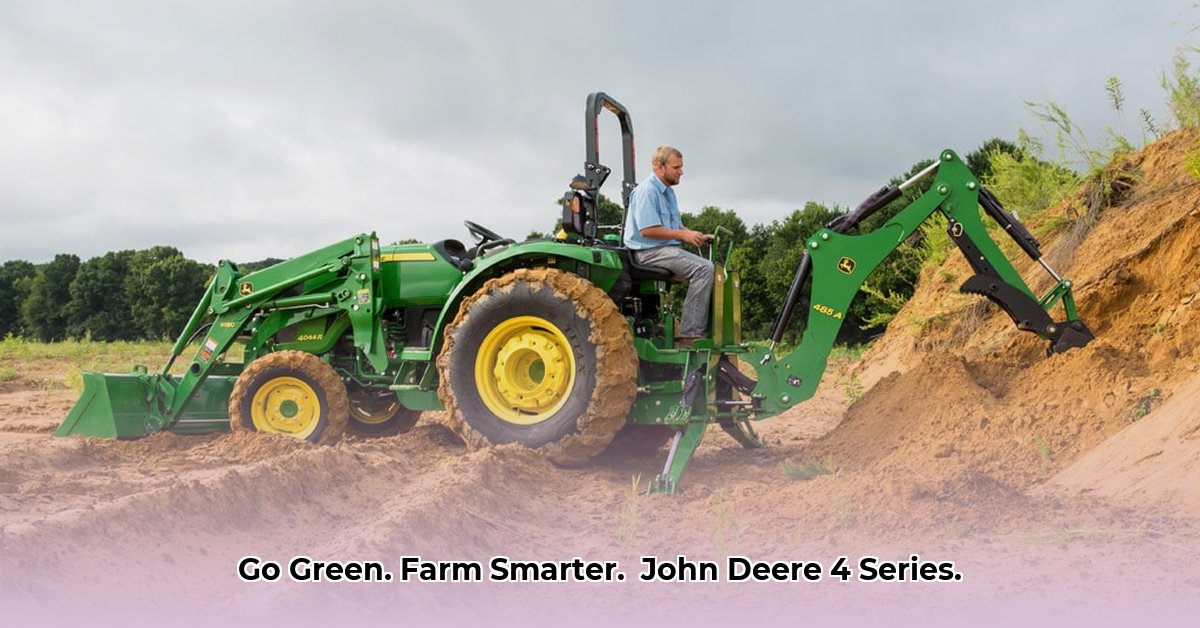
The John Deere 4 Series tractors, ranging from 43 to 75 horsepower, present a compelling case study in balancing power and sustainability in modern agriculture. This article delves into the technical aspects of their fuel efficiency, technological features, and overall environmental impact, providing actionable insights for farmers, John Deere, and policymakers. For more on vintage models, see this site.
Power and Efficiency: A Nuanced Perspective
The horsepower range of the John Deere 4 Series offers farmers a choice, but selecting the optimal model demands careful consideration of fuel efficiency. While higher horsepower equates to increased productivity, it also translates to greater fuel consumption. How can we quantify this relationship? Data on liters or gallons per hour of operation for each model within the 4 Series range is crucial for a truly informed decision. Simply focusing on horsepower is misleading without a corresponding analysis of fuel economy under various operating conditions. A larger engine does not always mean higher efficiency; the actual workload and environmental factors significantly influence fuel usage. This underscores the need for comprehensive data on fuel consumption across varied tasks and terrains.
Smart Technology: Enhancing Efficiency and Sustainability
The John Deere 4 Series incorporates technologies designed to boost efficiency and minimize environmental impact. Features like the electro-hydraulic hitch (available on certain models) optimize resource utilization, potentially leading to both fuel savings and reduced soil compaction. The iMatch™ Quick-Hitch system streamlines attachment changes, enhancing overall productivity. However, a complete sustainability assessment necessitates a deeper examination. While the iMatch system undoubtedly saves time, a full life cycle assessment (LCA) is needed to fully understand the material implications encompassing its production and eventual disposal. Such an LCA would provide a clearer picture of the overall environmental benefits, accounting for the manufacturing process and end-of-life management.
Environmental Impact: A Life Cycle Perspective
A comprehensive understanding of the environmental impact of the John Deere 4 Series requires more than simply fuel consumption figures. Detailed emission data – including carbon dioxide (CO2), nitrogen oxides (NOx), and particulate matter (PM) – are essential for assessing air quality impacts. Ideally, a comprehensive LCA spanning from manufacturing to disposal would provide the most accurate assessment of the tractor's environmental footprint. “Without a full LCA, we're missing crucial pieces of the sustainability puzzle,” notes Dr. Emily Carter, Professor of Chemical and Biomolecular Engineering at Princeton University. This data gap highlights the need for ongoing research to quantify the full environmental impact.
Cab vs. Open Station: Weighing Comfort Against Efficiency
The choice between a cab and an open station model presents a trade-off between operator comfort and fuel efficiency. Cabs enhance safety and comfort, shielding operators from the elements and noise. However, the added weight increases fuel consumption. Open station models offer better fuel economy but expose operators to harsher conditions. The optimal choice depends on individual farmer priorities. "Farmers must prioritize their needs,” says John Miller, Agricultural Extension Specialist at Iowa State University. "Safety and comfort are important, but fuel efficiency is a major factor in operating costs and environmental impact.”
Recommendations for Stakeholders
Effective strategies for enhancing the sustainability of the John Deere 4 Series require collaborative efforts.
Farmers/Ranchers:
- Short-Term: Carefully evaluate horsepower needs against fuel efficiency; consider the trade-offs between cab and open station models; prioritize iMatch™ compatibility for improved operational efficiency.
- Long-Term: Invest in precision agriculture techniques to optimize resource use; explore fuel-efficient farming practices; implement strategies for equipment optimization.
John Deere:
- Short-Term: Publicly release detailed fuel consumption and emissions data for all models; conduct and publicly share full LCAs; explore designs incorporating more eco-friendly materials.
- Long-Term: Invest in research and development of next-generation sustainable engine technology; investigate biofuel compatibility; focus on designing components for improved recyclability.
Government Agencies:
- Short-Term: Implement incentives for the adoption of fuel-efficient farming practices and precision agriculture technologies.
- Long-Term: Set stricter emission standards for agricultural machinery; increase funding for research and development in sustainable agricultural technologies.
The Road Ahead: Knowledge Gaps and Future Research
Significant data gaps remain, particularly concerning precise fuel consumption and emissions data under varying operating conditions. Additional areas for research include a comprehensive LCA that captures the environmental impacts across the entire product lifecycle, including manufacturing and disposal. Such research is crucial for a more realistic evaluation of the tractors long-term sustainability. Finally, proactive adaptation to evolving emission regulations is essential for long-term planning.
How to Minimize the Environmental Impact of John Deere 4 Series Compact Tractors
Key Takeaways:
- Implementing precision agriculture techniques, where feasible, significantly reduces resource consumption.
- Meticulous tractor maintenance and operator training maximizes fuel efficiency and minimizes emissions.
- Responsible disposal practices for used fluids and parts are paramount.
- Exploring biofuels and other alternative fuels holds the potential for substantial sustainability improvement.
- Farmer education and training on sustainable practices are essential for effective implementation.
This article aims to provide a data-driven and actionable guide for optimizing the sustainability of John Deere 4 Series tractors. Further research and data transparency are crucial to fully map the potential and limitations of these machines in the pursuit of sustainable farming.